Knowing the fire safety protocols that apply to your business is one step toward ensuring safety compliance; the next is to keep all equipment up to code and in good condition. However, how often should fire extinguishers be serviced? In the UK, it is the British Standard (BS 5306-3) that outlines the correct procedures around fire extinguisher maintenance and servicing.
This blog post will outline each of the services required, when they are needed, what they entail, who can carry them out and why they are so important.
Monthly Visual Inspections
This is the easiest but most frequent check to make. The Regulatory Reform (Fire Safety) Order 2005 states that this check can be carried out by any responsible member of staff in your company. This will more often than not be an on-site health and safety officer, fire marshal or facilities manager.
Conducting a visual inspection is the best way to ensure the extinguishers haven’t been damaged, moved out of compliant areas, or tampered with. The check includes ensuring there are no obstructions to the extinguisher, making sure the instructions are visible and that the safety pin is in place and the tamper seal is unbroken.
Then, the responsible person checking will need to verify that the pressure gauge is in the ‘green’ zone, lift the extinguisher to check if it is still full, and then review the maintenance notes to determine when the next service is due.
Any damage or tampering will need to be reported and rectified by a qualified technician. This inspection is the most convenient and fastest way to ensure that any type of fire safety equipment is kept in compliance with regulations. Failure to do so can lead to company shutdowns, fines and even imprisonment when checked by a qualified technician.
Yearly Fire Extinguisher Servicing
Every year, each type of extinguisher needs to undergo a basic service. This will need to be carried out by a trained technician who has British Approvals for Fire Equipment (BAFE) qualifications or an equivalent. This is a more in-depth check than the monthly process and is important for the quality of the extinguisher and the compliance of your company.
The technician will conduct a visual inspection for any corrosion or damage, check the safety pin and seals and take a pressure reading. A pressure reading will not be needed on a C02 extinguisher. They will test the legibility of any instructions and then remove the hose to check for damage and internal obstructions.
They will then check the weight of the extinguisher and wipe it down, double-check the condition of the wall mountings, perform a risk assessment on the surrounding area and see if associated signage is clear and in the right places.
If the technician reports any major issues with regulation compliance, particularly if they are repeated, authorities can close your business until the correct changes have been made. Having your fire extinguishers at the correct standards will ensure the continued running of your company, as well as potentially saving a life should an emergency occur.
Extended Fire Extinguisher Servicing
Monthly visual checks and annual servicing should be conducted on any kind of fire extinguisher, but when discussing more extensive servicing, how often should fire extinguishers be serviced splits.
Powder, powder-primary sealed and water-based extinguishers are all required by law to have an extended service every five years. CO₂ and clean gas agent extinguishers need a full overhaul service every 10 years.
The five-year checks will include everything that takes place during the basic annual service. This is followed by fully discharging the extinguisher, where the qualified technician will analyse range, discharge pattern and duration. The valves will be checked and replaced where needed, the head cap O-ring will be replaced and reseated, and the inside of the extinguisher will be checked for corrosion. Finally, the extinguisher is then refilled and pressure tested.
Extinguishers that require a 10-year service are due to the higher pressure they are kept at, which allows for that pressure to remain for longer, and the service needs to take place in a specialised facility.
The 10-year check includes the steps from the basic check and most of the five-year service. The differences are that the primary valves are always replaced and that the extinguisher body will be sent off for hydrostatic testing. This test will scan the extinguisher for any bulging, cracking or stretching that would mean it is compromised before the refill.
Again, failure to call a technician to conduct these checks can lead to business closure, fines and imprisonment or loss of life if the extinguisher does not perform correctly. The consequences can be found in more detail in this helpful blog post about the importance of fire extinguisher servicing.
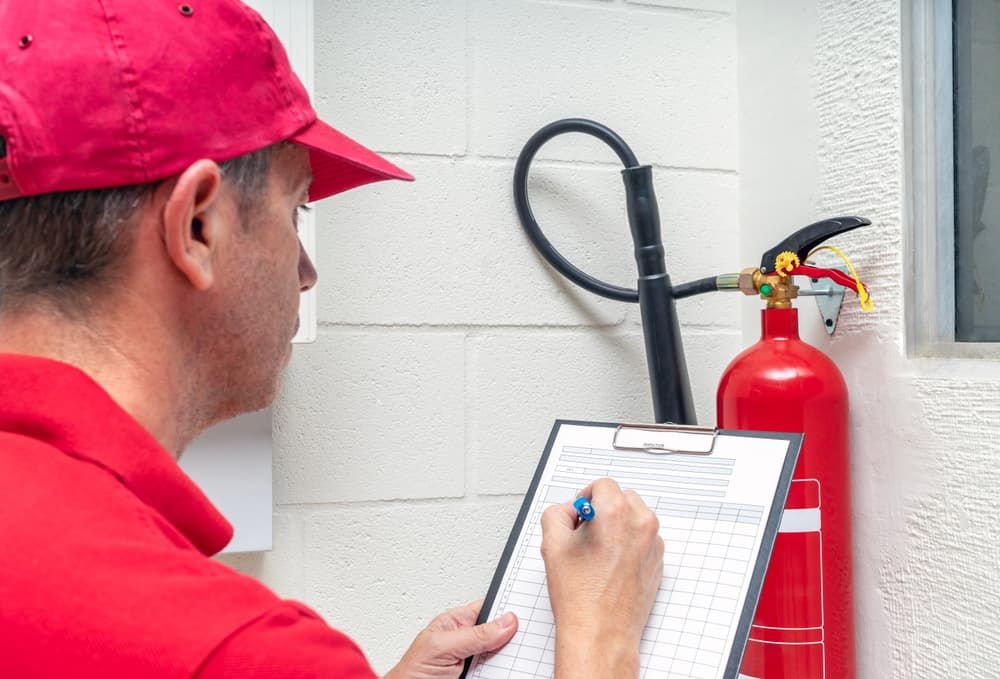
How Fire Extinguishers Are Serviced
Fire extinguisher servicing helps identify any issues such as damage to the safety catch, problems with the firing mechanism or general signs of wear and tear. These checks are critical in reducing the risk of failure. In the UK, fire extinguisher maintenance must comply with the British Standard BS 5306-3 and the Regulatory Reform (Fire Safety) Order 2005.
This includes monthly visual inspections by a responsible staff member and annual servicing by a qualified technician, typically certified under schemes like BAFE SP101.
While conducting their checks technicians can also verify that the extinguisher type is appropriate for the environment it’s protecting. Neglecting proper servicing can result in legal penalties, invalidated insurance, or worse, equipment failure during an emergency, potentially leading to injury or death. To maintain readiness, it’s vital to follow best practices, such as performing those monthly checks, keeping extinguishers clean and correctly positioned, ensuring refills after use and making sure all relevant staff are trained.
When Should You Replace an Old Fire Extinguisher?
Eventually, it will stop being a case of how often should fire extinguishers be serviced and become how often they should be replaced.
Any physical damage that can be seen either during a professional service or a monthly visual check is grounds for replacement. This can include rust, damaged hose, cracks in the shell or nozzle or a broken handle. If a fire extinguisher fails parts of its checks during a professional service, you will also be strongly advised to replace it with a newer one in working order.
It should also be remembered that fire extinguishers need to be refilled after any use, no matter how brief.
Choose Fire Safe Services For Your Fire Extinguisher Service
Servicing your fire extinguishers is far more than a simple tick in a box; it is a crucial part of ensuring your workplace remains safe, legally compliant and fully prepared in the event of a fire. Ensuring you stay on top of all the legal regulations and required checks can make the difference between a minor incident and a devastating loss.
At Fire Safe Services, we understand the importance of reliable fire safety equipment, which is why our team of fully qualified technicians is dedicated to taking the uncertainty out of fire extinguisher maintenance. We ensure your extinguishers meet all current British Standards and legal requirements, giving you peace of mind that your business, staff, and property are well protected.Contact Fire Safe Services today to book your annual service or arrange a free site survey. Together, we’ll help keep your workplace safe, compliant and ready for whatever comes next. Call us on 01527 570 952 or email info@firesafeservices.co.uk